Menu

Synapse – Neurophysiology Suite

Used in 621 published studies →

Whether your research is simple or sophisticated, manage everything on one platform with TDT’s Synapse software.

The Synapse software platform provides a fully integrated approach for your neuroscience research. Design experiments for data collection, processing, and stimulus presentation.  Synapse also offers streamlined tools for neural recordings, such as filters, spike sorting, and detection of evoked responses – in addition to calcium imaging (Fiber Photometry) and behavioral control. Signal presentation for optogenetics, auditory, and electrical stimulation is all supported. This includes timers and triggers that can be implemented for real-time closed-loop control.

Synapse provides everything you need to perform your research, and with TDT’s lifetime technical support you can call on us to make sure your research design is implemented to meet your needs.

Research Uses

Product Specs

Resources

Publications

621 published studies used the Synapse. The newest:

Scientific Reports · Nov 2026

Ultra-micro electrodes support low-current amplitude discrimination in intracortical microstimulation (opens in a new tab)

Elizabeth T. Su, Vinayak Retheesh, Karthik Kumaravelu, … Kevin J. Otto

Abstract

Abstract Restoring somatosensory feedback is essential for achieving natural, embodied control of prosthetic limbs. Intracortical microstimulation (ICMS) of the somatosensory cortex can provide artificial touch by activating cortical neurons directly. Here, we systematically investigate how electrode contact size influences amplitude discrimination performance during ICMS. Six rats were chronically implanted with custom multielectrode shanks in the somatosensory cortex. Over twelve weeks, behavioral just-noticeable differences (JNDs) were quantified across eight electrode diameters (5–50 µm) using an adaptive discrimination paradigm. Discrimination thresholds were significantly lower for 5 µm and 10 µm sites than for larger contacts because these electrodes operated at lower reference stimulation amplitudes within their established charge injection safety limits. Weber fractions remained stable across electrode sizes, demonstrating proportional scaling of perceptual sensitivity with stimulus intensity. We used a biophysically realistic modeling framework to identify the underlying neural correlates of ICMS-induced amplitude discrimination. Both the magnitude of neural responses (changes in the number of activated neurons and the total population spike count) and the population mean spike count contributed to perceptual discrimination. These findings indicate that ultra-microelectrodes enable ICMS at substantially lower reference amplitudes, producing lower absolute discrimination thresholds while preserving Weber-like proportional scaling. Ultra-microelectrodes therefore preserve established psychophysical scaling while supporting low-threshold stimulation within their safe charge injection limits, enabling high-density sensory neuroprostheses.

bioRxiv* · Nov 2026

Multi-faceted role of dopamine afferents to the ventral pallidum in reward processing (opens in a new tab)

Williams-Spooner M, Cornish J, Prasad AA

Abstract

The ventral pallidum (VP) is necessary for reward processing and a key node in dopamine (DA) pathways. Yet the direct DA inputs have not been studied during reward learning. Here, we elucidate the role of VP DA in reward processing using circuit tracing, fibre photometry, and behavioural pharmacology in male rats. We show that VP receives both non-DA and DA inputs from the midbrain. During an instrumental reward conditioning paradigm, we characterized VP DA activity using a DA sensor (GRAB_DA1h) across learning, extinction, re-acquisition, and motivational test. Followed by pharmacological manipulation using the DA-antagonist (fluphenazine) in VP to demonstrate a causal role in reward learning and motivation. Together our findings advance the functional contributions of non-canonical mesolimbic DA pathways.

The Journal of Nutrition · Nov 2026

Protein restriction amplifies nucleus accumbens dopamine responses to protein-rich food during operant feeding in male mice (opens in a new tab)

Taghipourbibalan H, Huijgens SW, Volcko KL, McCutcheon JE

Abstract

Background Animals strongly defend protein intake, but how protein status shapes moment-to-moment reward signalling in mesolimbic circuits remains unclear, particularly when the effort required to obtain food varies. Objective We tested whether dietary protein restriction altered nucleus accumbens (NAc) core dopamine signalling when mice worked for food of differing nutritional value in the home cage. Methods Under surgical anaesthesia, male C57BL/6 mice (n=12; ∼12 weeks old at diet initiation) were injected in the NAc core with a virus expressing the fluorescent dopamine sensor GRABDA and implanted with fibre-optic cannulas. In food-access tasks, nose pokes delivered either chow (protein-containing) or sucrose pellets. Across sessions, pellets required either one nose poke (FixedRatio1) or an increasing number (ProgRatio). Fibre photometry measured dopamine release for both pellet types and schedules during three dietary phases: non-restricted diet (NR1; 18% protein), protein-restricted diet (PR; 4%), and restored non-restricted diet (NR2), with 1 week of adaptation between phases. Behavioural and photometry data were analysed using repeated-measures ANOVA. Results Home-cage food intake remained stable, but bodyweight gain fell markedly during PR and partially recovered in NR2 (+10.1% NR1 vs. +1.2% PR vs. +6.0% NR2, p .05). During ProgRatio, dopamine responses at pellet delivery and retrieval did not differ between pellet types in any phase (all ps>.05). Conclusions Protein restriction did not globally amplify reward-related behaviour or dopamine signalling. Instead, it selectively biased NAc dopamine according to the animal's nutritional status, nutrient context, and task demands.

* Preprint: not yet peer reviewed.

Read all 621 papers →

How to cite the Synapse Neurophysiology Suite

Name the model in your Methods so readers can find the equipment you used, for example:

Synapse Neurophysiology Suite (Tucker-Davis Technologies, Alachua, FL, USA)

Request this product

Synapse GizmosSynapse makes it easy

Gizmos are the programming component of Synapse.

Each Gizmo has a unique set of functions for processing and controlling acquired signals, generated waveforms, and logic. Multiple Gizmos can be linked together to build complex and parallel signal processing chains. Each Gizmo has predefined controls that can be fixed during experiment design or adjusted during runtime in Synapse.

Synapse Gizmos

Closed-loop control

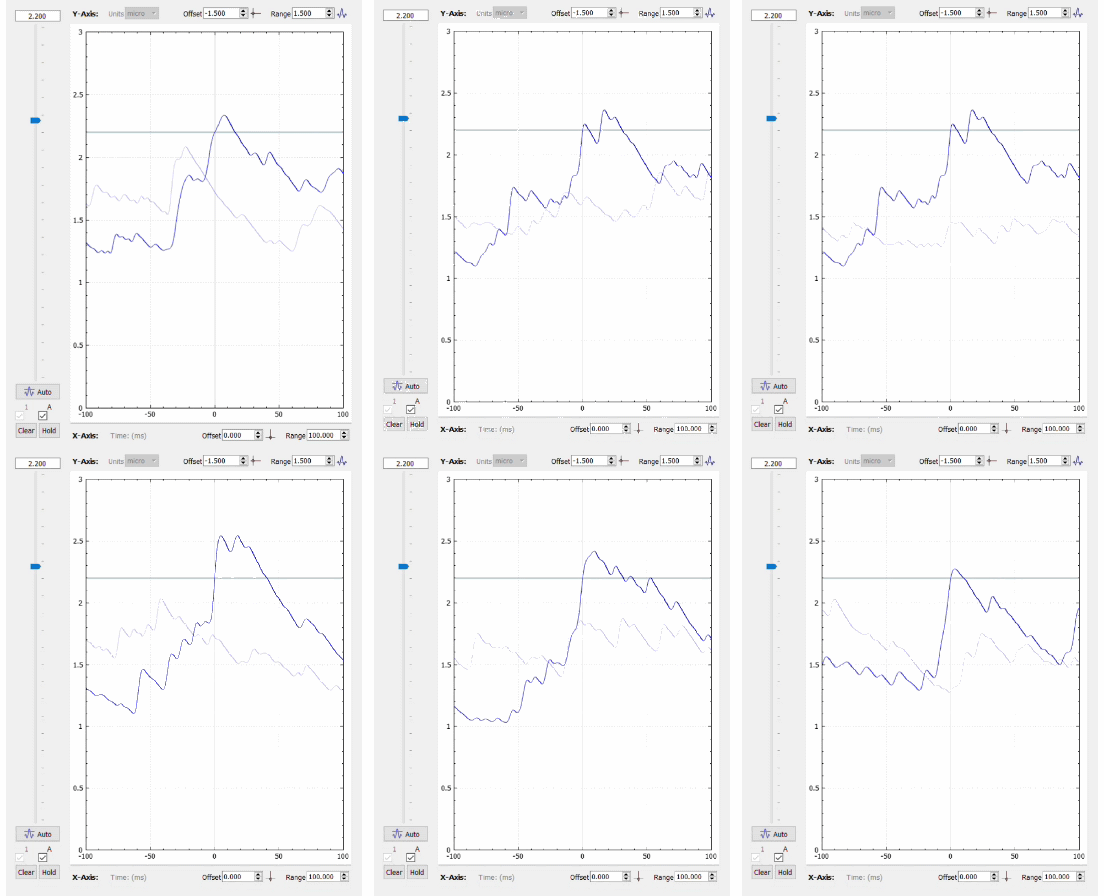
The Synapse software platform is a seamless tool for acquiring incoming neural signals and event information from video trackers and external behavioral devices. In turn, Synapse can trigger an external stimulator with <1 ms precision.


Using digital events from external devices

Synapse elegantly acquires all digital events with <50 us precision.

Incoming events from operant chambers and video trackers are easily binned and processed for controlling TDT’s electrical stimulators and third party optogenetic light sources.


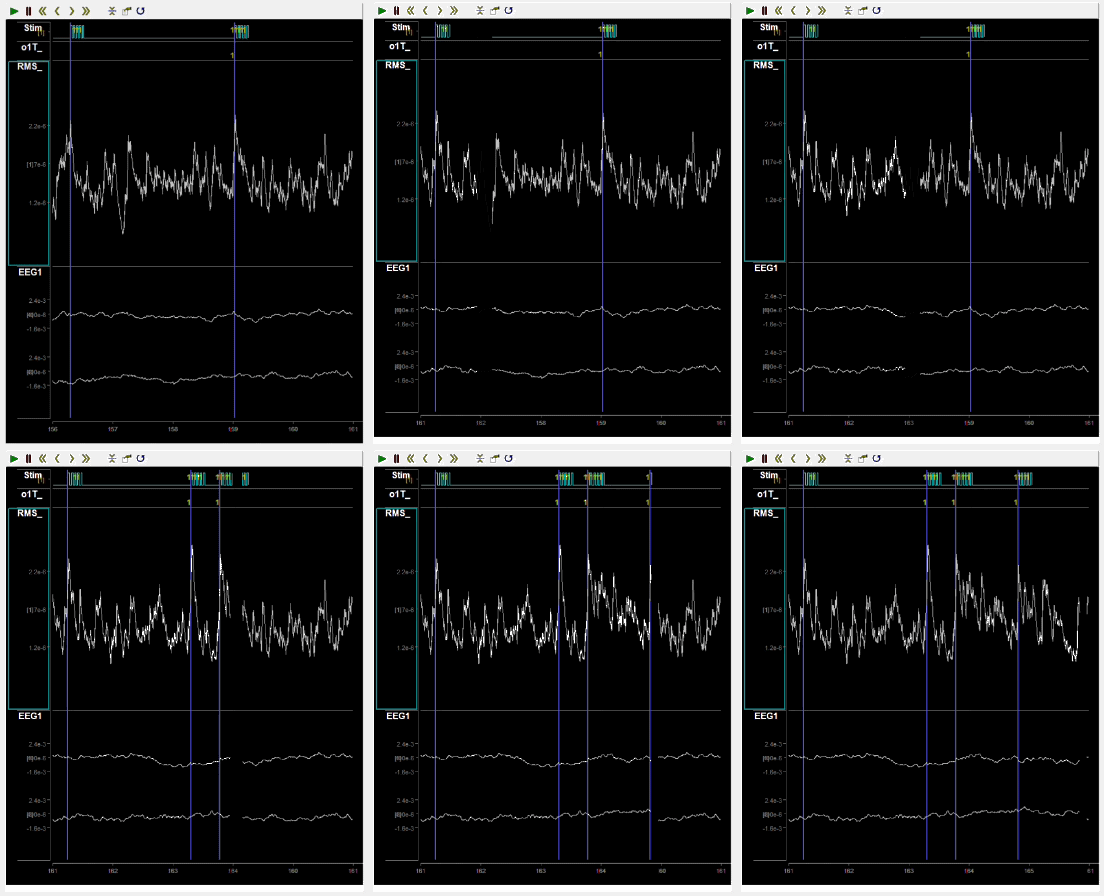
Processing LFP, EEG and EMG signals

Process complex neural signals with Synapse and the RZ Processor. For example, the Unary Processor Gizmo can:

  • Calculate the energy in a fixed bandwidth, such as Theta and Gamma power bands
  • Measure the force of a muscle contraction
  • And more!

These signals can then be thresholded to trigger an event, such as an external stimulator.

Synapse Packages

Synapse Base provides the basic tools for designing, processing, and collecting your neural data. Further expand Synapse’s functionality with tailored software packages. The following chart shows what packages are required for each experiment type. Click the Research link to learn more:

Packages

Research Fiber Photometry* Single-Unit Neurophys* Stimulation* Pynapse Coder* Synapse Base Only
Fiber Photometry X – – – –
Spike Sorting – X – – –
Electrical Stimulation – – X – –
Auditory Stimulation – – X – –
Behavior Control – – – X –

* Requires Synapse Base

For more questions or to start a 30-day trial:

Contact TDT

Fiber Photometry

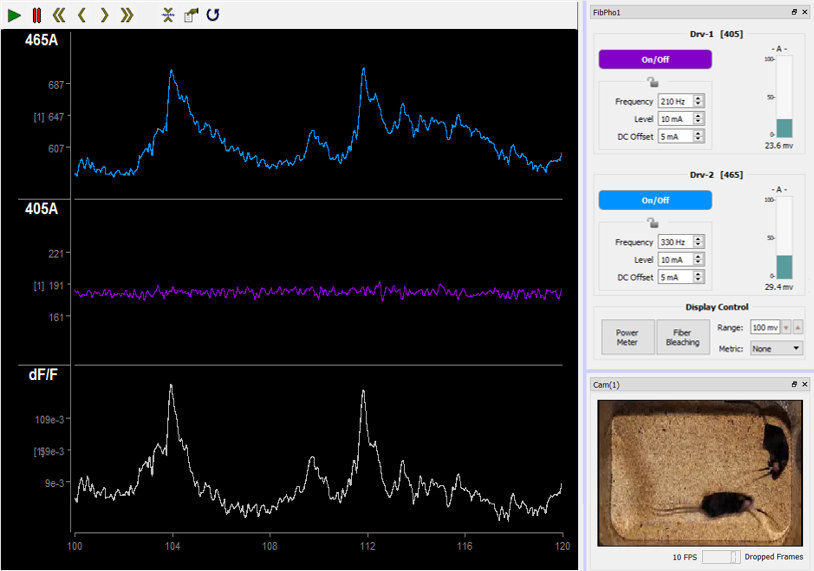
An all-in-one Gizmo tackles setup of LED drivers and measuring power for fiber photometry, while also calculating ΔF/F and lock-in amplification in real-time.

Digital events, such as behavioral codes from third party devices, are processed alongside the neural signals. The digital signals are saved for offline analysis and can be used online for acquiring evoked responses or for closed-loop control.

Fiber photometry - Recording in Synapse - dF/F


Spike Sorting

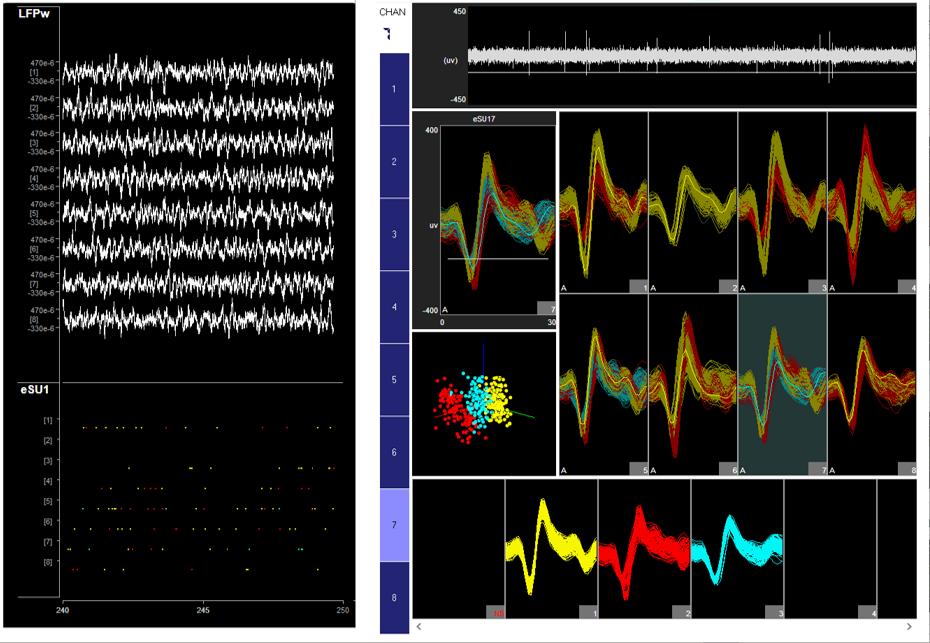
Record single units and perform real-time, multi-channel spike sorting with automated thresholding. Online sorting Gizmos are available for PCA-based, box, and tetrode clustering algorithms.

Trigger from neural firing rates with sub-millisecond access to all real-time neural activity. Use the Sort Binner Gizmo to trigger stimulators based on the firing of a single neuron (or all units) in a fixed time window (≥ 20 ms).


Synapse - Single Units and LFP ephys

Behavioral Control

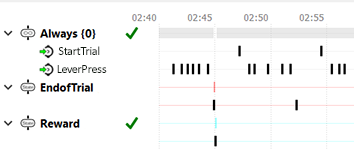
Pynapse is an all-in-one Gizmo with built-in features that simplify the configuration of behavioral paradigms and give users complete experimental control. Quickly design a simple task (e.g. self-administration of a reward) or a complex task (e.g. two-alternative force choice experiment) using the integrated Python coding.

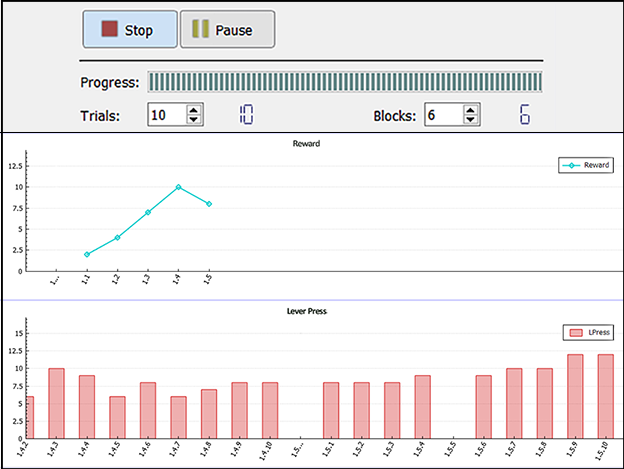
Pynapse displays all behavioral events, lever presses, rewards, and other experimental metrics in real-time to allow for rapid and efficient changes to task requirements in response to the subject’s skill set.

All this and more – perfectly integrated into your electrophysiology and/or fiber photometry project!

Pynapse Trial Metrics screenshot

Stimulation

Synapse Stimulation is an integrated toolset designed for electrical and auditory stimulus generation*. There are Stimulation Gizmos to generate simple monophasic pulses, sinewaves, and complex arbitrary waveforms. All Gizmos have precise real-time control of the amplitude, duration, and interstimulus interval of the stimulus waveform. In addition, design complex sequences in Synapse or with a third-party software, such as Matlab or Python.

* Optical stimulation is included with Synapse Base.

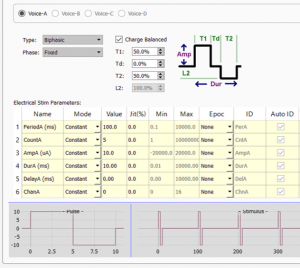
Electrical Stimulation

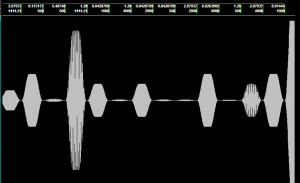
Auditory Stimulation

The Stimulation package expands upon mono- and biphasic pulses to deliver complex stimulation patterns across multiple electrodes. Design stimulation paradigms to assess stimulus response curves, drive patterns for current steering, and elicit real-time tactile feedback and natural sensory responses.


The Stimulation package provides all the tools for standard auditory presentation. Design simple and complex waveforms to control stimulus presentation for such tasks as tuning curves, P300 event-related potentials, and mismatched negativity.


Synapse setup for tone pips


Save and Track your Experiments

Synapse has sophisticated tools for managing experiments, subjects, and data. Synapse has version control for experiments, a digital notebook for subject settings, and a database to review and access your recordings.

Version Control

Made a mistake? You can easily return to your previous experiment setup. Synapse’s version control logs all experiment changes and saves these versions to a database for easy retrieval. Navigate the database to access your preferred experiment protocol or review previous changes.

Digital Notebook

Synapse has a digital notebook to track subject settings and to timestamp any changes made during a recording. For example, previous spike thresholds and sort codes are automatically loaded for the subject’s next recording session. Also, filter settings, stimulation paradigms, and LED power for fiber photometry or optogenetics can be pre-set and saved for use in the next recording session.

Data Management

Review parameter changes during recording sessions with Synapse’s history function. Also use the history function to quickly access TDT’s offline analysis tools, such as Scope or Explorer, or simply copy and paste the file pathway to import your data into MATLAB or Python. Use the searchable database to access recording sessions based on experimental protocol and subject.