Menu

Electrophysiology

Real-time systems for expandable, high channel count analog and digital electrophysiology

The Industry Standard

TDT Electrophysiology

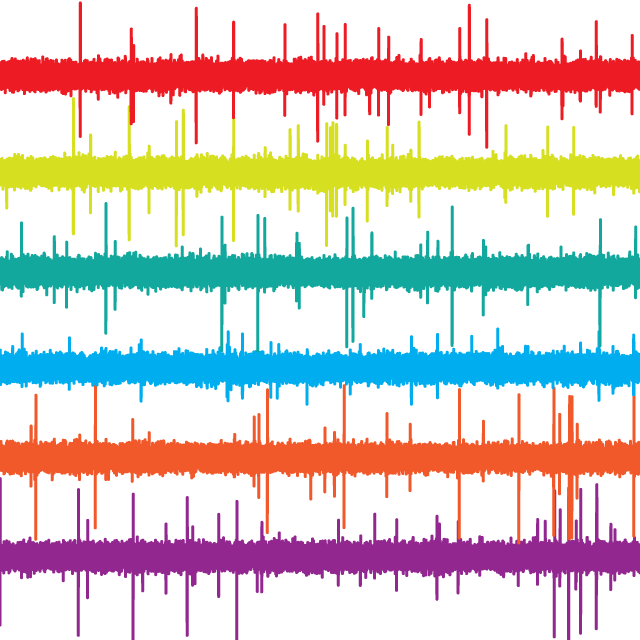
Electrophysiology is the gold standard for measuring neural activity and covers a wide range of spatial and temporal resolutions depending on which technique is used [DOI 10.1038/nn.3839]. Single and multi-neuron firing or local field potentials can be detected via depth probes and global signals, such as EEGs, can be picked up via screws or surface electrodes. By recording the electrical signals generated by neurons, researchers can study how individual cells and neural populations encode information, respond to stimuli, and coordinate behavior.

TDT is widely regarded as the gold-standard in electrophysiology recordings and has been for decades. Our systems are ow-noise amplification, high bit-depth resolution and scale to match every category of extracellular ephys research, so researchers can record anything from four channels of EEG/ EMG for sleep studies to 1024 channels of analog single unit data for closed-loop BMI research.

Why is real-time so important?

Our 50 MHz quartz crystal clock ensures synchronization of every signal that goes through your TDT processor. No jitter. No lag. No guesswork. Because our signal clocks are shared, we can guarantee perfect closed-loop control every time. Competitor systems might use computer CPUs to acquire signals that vary in time delay under load or that require post-processing of multiple signals for alignment. We don’t think that should be the way important research is done.
Choose Your Ephys Configuration

Flexible, scalable, and high-fidelity, TDT’s iCon analog amplifiers are the cleanest options on the market for electrophysiology recordings.

We have perfect options for low impedance EEG + EMG all the way to silicon probe single-unit spike recordings.

The iA4 integrates time-tested amplifier and digitization technology in a differential configuration to provide remarkably low-noise recordings while ensuring biomedical isolation.

The iA8 is an eight-channel recording amplifier designed for single-subject recordings using TDT’s ZIF-CLIP and Omnetics analog headstages. It offers the same high-performance recording as the iA16 and iA32, with a large +/- 500 mV input range that provides ample headroom for freely moving subjects and avoids saturation during seizures or electrical stimulation. The iA8 supports both single-ended and differential recording modes, making it a versatile choice for epilepsy research, chronic free behavior recordings, and a wide range of neurophysiology applications.

Explore all the iA Modules

For Intan and Neuropixels

High Channel Count Digital Recordings

TDT’s digital recording modules provide the most cost-effective way to record high channel count electrophysiology while maintaining our real-time signal acquisition and closed-loop control.

The iD2 Intan-based recording amplifier and iD3 Neuropixels interface stream full bandwidth data at 25 kHz directly to disc. The iD2 can handle up to 256 channels and the iD3 can stream 384. Each has access to 16 focus channels for PCA spike sorting, online RMS calculations, spike counts, and more.

Discover the iD2 and iD3 

Non-Ferrous Ephys Recordings

fMRI

TDT has engineered a complete solution for concurrent electrophysiology recordings during fMRI imaging. The challenge of simultaneous modalities is that the electrophysiology recording system can introduce imaging artifacts, and the MRI system introduces artifacts on the electrophysiology system.

The RZ2 or RZ5D processor paired with the Subject Interface (PZA) amplifier and our custom MRI recording kit provides the large input range (+/-500 mV) and excellent signal resolution needed to capture scanner artifacts without saturating, thus preserving neural signal fidelity. The MRI Recording Processor gizmo in Synapse provides real-time artifact rejection for visualization of spikes and LFPs during scans.

Visit Our fMRI Page

High Fidelity Analog Recordings

Human and NHP Ephys

The RZ2 BioAmp Processor is TDT’s premier system for high channel count neurophysiology, closed-loop control, and human recording applications. It is the only system that provides scaling up to 1024+ analog channels for human clinical research and high-density non-human primate (NHP) recordings.

The RZ2 can stack up to 8 DSP cards and UDP communication for power real-time closed-loop control of BCIs or BMIs. The RZ2 can also be paired with the Subject Interface stimulator for high channel count stimulation and recording paradigms up to 50 kHz in sampling rate.

Why TDT?

When you choose a TDT behavioral neuroscience recording system you choose legacy, innovation, and commitment. Every system is designed and assembled at our headquarters in Alachua, Florida by our long-time employees.

Legacy

Tucker-Davis has been the industry leader in real-time electrophysiology recordings for decades. Researchers had been using our System II equipment for auditory research since the early 90's and quickly made the move to higher channel count Medusa bioamps for more complicated neurophysiology experiments [doi.org/10.1152]. The following two decades moved quickly scaling from 16 channels up to 1024 channels of 28-bit data in human patients with our PZ5M processor [10.1016/j.neuron.2018.04.031]. Our real-time electrophysiology is still considered the gold standard to this day.

Innovation

The journey of our electrophysiology recording equipment had humble beginnings but are now used in every top institution around the globe. The iA16 and iA32 are the perfect new products for researchers eager to record electrophysiology in combination with other equipment in our iCon Platform. The most amazing part is that these amplifiers are the same ones used in our PZ and Subject Interface amplifiers. You get the best amplifier in the industry at a lower cost, convenient form factor, and as part of the next generation of neurophysiology and behavior equipment.

Commitment

A full-time Technical Support staff is a part of your system for free and for life. You call us and we pick up. We are experts with advanced degrees in neuroscience and neural engineering and take great pride in making sure you get the best experience possible out of using our top-tier recording system. We challenge you to find a researcher who has worked with our Support team who would not recommend us first.