
RA4PA & RA16PA Medusa PreAmps
Used in 375 published studies →
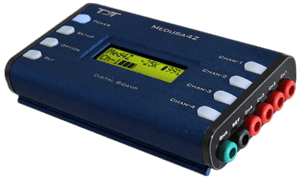
Medusa PreAmps are a low-cost alternative for researchers who only need the basics. These PreAmps have lower resolution, a lower input range of +/- 4 mV, and a higher noise floor compared to TDT’s PZ preamplifiers. The RA4PA offers four channels and the RA16PA offers sixteen channels for researchers doing ABRs or low channel count neurophysiology recordings.
THE MEDUSA4Z
Research Uses
Resources
Publications
- Low channel count neurophysiology
- Auditory research
Publications
375 published studies used the RA4PA & RA16PA. The newest:
bioRxiv* · Oct 2026
Artificial selection diversifies birdsong through polygenic changes across sensory and motor systems (opens in a new tab)
Abstract
A bstract Vocal learning, or the ability to acquire and produce contextualized sounds through social interaction, underlies human speech yet has evolved in a few animal lineages, including songbirds. In songbirds, learned song is produced by a dedicated neural circuit and depends on auditory feedback for its acquisition and maintenance. Roughly four centuries of artificial selection on the domestic canary ( Serinus canaria ) have produced song breeds whose vocalizations diverge as much as those of distinct species, offering a rare intraspecific system in which to identify the genetic and neural changes underlying vocal divergence. Here we show that selection for song reshaped the canary song control system. Compared with breeds selected for plumage or body form, song breeds show increased neural progenitor proliferation and breed-specific changes in neuronal recruitment, sensorimotor brain region volume, and auditory sensitivity. Genome-wide analyses reveal a polygenic architecture underlying song divergence, enriched for transcriptional regulation and synaptic transmission genes. Among these, we find a coding variant in ADGRV1 , the gene mutated in human Usher syndrome type 2C, associated with low-frequency singing and elevated auditory thresholds in canary. Disrupting ADGRV1 in zebrafish alters hair cell dynamics, linking adgrv1 mutation to a peripheral sensory mechanism. These findings demonstrate that learned vocal behavior can diversify rapidly through changes spanning sensory, neurogenic, and motor systems, with hearing itself as a substrate for selection. S ignificance S tatement Centuries of human fascination with the canary’s song have, in effect, conducted a massive parallel evolution experiment on the neural basis of vocal learning. By combining population genomics and comparative neuroanatomy across song breeds with functional tests in zebrafish, we identify molecular and cellular changes by which selection rapidly reshaped learned song. Selection acted not only on the brain but also the ear: a variant in ADGRV1 , a gene linked to human hearing loss, associates with lower-pitched song and poorer hearing in canaries, and mutation in zebrafish alters sensory hair cell dynamics. The domestic canary reveals how quickly selection can remodel the machinery of vocal learning and offers a tractable system for asking how humans came to speak.
The Journal of Neuroscience · Sep 2026
Temporal progression of auditory brainstem dysfunction and behavioral phenotypes in mouse models of tauopathy (opens in a new tab)
Abstract
Cognitive decline in Alzheimer's disease and related dementias (AD/ADRD) frequently cooccurs with motor and sensory processing impairments. While auditory abnormalities were reported in beta-amyloid-based models before cognitive decline, the effects of tau pathology on auditory circuit function remain poorly understood. The PS19 mouse model expressing the P301S tau mutation exhibits tau pathology associated with frontotemporal dementia. When combined with the humanized ApoE ɛ4 allele, these mice show accelerated tau accumulation and neurodegeneration. We investigated the temporal progression of auditory and behavioral deficits in PS19 and ApoE4/PS19 mice of either sex at 3 and 7 months. Auditory processing was assessed using auditory brainstem response (ABR) recordings, while anxiety-like and motor behaviors were evaluated using the elevated plus maze and rotarod assays. PS19 mice exhibited auditory pathway dysfunction at 3 months, characterized by reduced and delayed neural responses to acoustic stimuli. These auditory deficits occurred without detectable behavioral changes in anxiety- or motor-related measures. By 7 months, cochlear nucleus-derived ABR activity shifted from an initial reduction to elevation relative to controls, suggesting compensatory hyperexcitability. In contrast, ApoE4/PS19 mice showed reduced ABR amplitudes and shortened response latencies that persisted with age, accompanied by altered anxiety-like behavior and motor performance. Together, these results demonstrate that auditory pathway dysfunction may represent an early marker of tau pathology preceding behavioral impairment. The divergent temporal patterns of ABR alterations across genotypes suggest that genetic context, particularly ApoE4, modulates the progression of tau-driven circuit dysfunction, highlighting ABR as a potential noninvasive biomarker for early tau-related neurodegenerative disease.
Advanced Science · Sep 2026
Printing-Assisted Integration of Thermal, Fluidic and Electrical Components in Implants for Focal Brain Cooling (opens in a new tab)
Abstract
The limitations of electrical neuromodulation are driving the development of neuroprosthetic systems enhanced with complementary modalities. A key technological challenge however remains the integration of the necessary hardware components (optical, thermal, fluidic, electrical) into miniaturized implants. Here we present a design framework, inspired by fast prototyping, that promises to reduce the complexity, fabrication time, and device bulk of multimodal neural interface systems. By combining extrusion‐based 3D printing of silicones and discrete electronic components, we integrated thermal neuromodulation and electrical recording capabilities in soft packages suitable for placement on the cortical surface of rodents. When linked to an autonomous auxiliary driver unit, these packages establish rapid, stable and localized hypothermia together with ElectroCorticoGraphy (ECoG) recording. In a rodent model of epilepsy (4‐aminopyridine), we demonstrate hypothermia‐induced suppression of seizure‐like activity. Our approach may advance the clinical translation of focal hypothermia as an alternative therapy for drug‐resistant focal epilepsies.
* Preprint: not yet peer reviewed.
How to cite the RA4PA & RA16PA
Name the model in your Methods so readers can find the equipment you used, for example:
RA4PA & RA16PA Medusa PreAmps (Tucker-Davis Technologies, Alachua, FL, USA)